
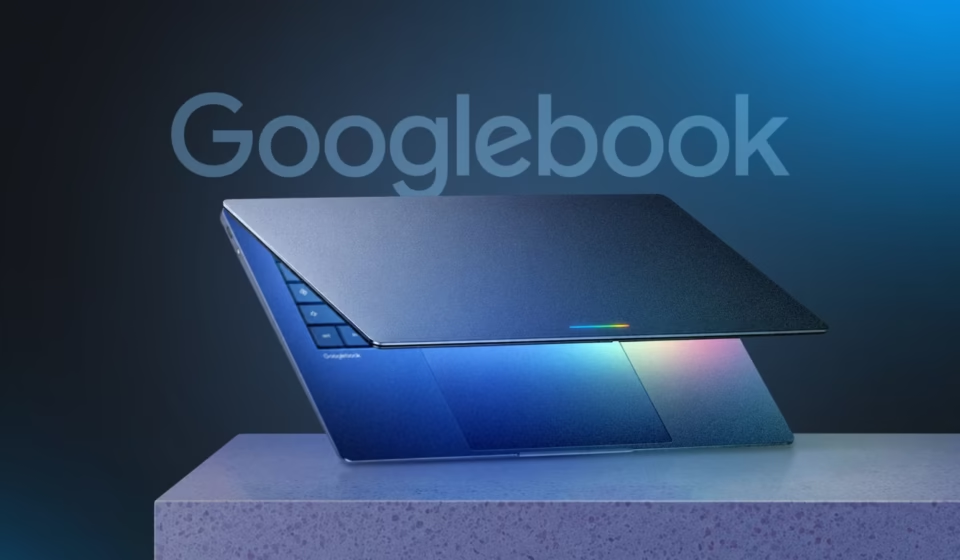

Google is getting ready to put its new Googlebook laptops in consumers’ hands, with pre-orders scheduled to open on September 21, 2026, at 9 a.m. ET. The new laptop category is Google’s attempt to rethink what a laptop should be by combining the strengths of Android, ChromeOS and Gemini AI into a more integrated computing experience.
Google first introduced Googlebook in May as a new category of premium laptops designed around what it calls Gemini Intelligence. Unlike conventional Chromebooks, Googlebook is built around a technology stack that brings Android’s native app ecosystem together with ChromeOS-style web productivity.
The company has now moved the project closer to retail availability. Acer, Asus, Dell, HP and Lenovo are confirmed as the first manufacturers building Googlebook devices, although Google has yet to reveal final pricing and the complete list of configurations that will be available to order.
When can you pre-order Googlebook?
Googlebook pre-orders will open on September 21 at 9 a.m. ET.
Google confirmed the date through its Googlebook website and communications to people who had registered for updates. The official Googlebook site currently promotes September 21 as the pre-order date.
What remains unclear is the exact gap between pre-orders and shipping.
Google has confirmed that the first Googlebooks are coming in fall 2026, but it has not yet published a definitive shipping date for the first devices. That means buyers interested in getting one will have to wait for additional retail information before knowing exactly when their laptop will arrive.
What exactly is Googlebook?
Googlebook is not simply a new Chromebook brand.
Google describes it as a new category of flagship laptops combining the best of ChromeOS and Android. The company says the platform is designed around premium hardware, Gemini-powered intelligence and closer integration with Android phones.
That distinction matters.
Chromebooks have traditionally focused on simplicity, web applications, cloud services and relatively lightweight hardware. Googlebook is intended to push further into the premium laptop market while retaining Google’s software ecosystem.
Google says Googlebooks will offer the best of ChromeOS and Android, while Android phone integration will make the laptop feel more connected to the user’s existing devices.
In other words, Google isn’t trying to replace the Chromebook with a more expensive version of the same product. It’s creating a separate category positioned higher in the laptop market.
Gemini is at the center of Googlebook
Artificial intelligence is arguably the most important part of Google’s Googlebook strategy.
The company introduced Googlebook as a laptop designed for Gemini Intelligence, putting Google’s AI assistant at the center of the user experience rather than treating it as a separate application.
The official Googlebook website currently highlights several Gemini-powered features.
Magic Pointer
Magic Pointer is designed to let users select something on the screen and immediately ask Gemini to analyze, compare or create something based on it.
That could make the mouse pointer more than a traditional navigation tool. Instead of copying text, switching applications and manually feeding information into an AI assistant, Google is trying to bring Gemini directly into the desktop workflow.
Google’s current product page specifically describes Magic Pointer as a way to select content and ask Gemini about it instantly.
Create My Widget
Another unusual feature is Create My Widget.
Rather than relying exclusively on a fixed collection of desktop widgets, Google says users can ask Gemini to create a custom widget.
That could potentially make the desktop more personalized without requiring users to understand how widgets are built. The practical value will depend on how flexible these widgets are and what data sources they can access.
Still, the concept fits Google’s larger goal: turning AI from an application you open into a layer that helps shape the computing environment itself.
Googlebook and Android phones
One of Google’s strongest arguments for Googlebook may have little to do with the laptop itself.
The company is building Googlebook to work closely with Android smartphones.
Two features highlighted by Google are Cast My Apps and Quick Access.
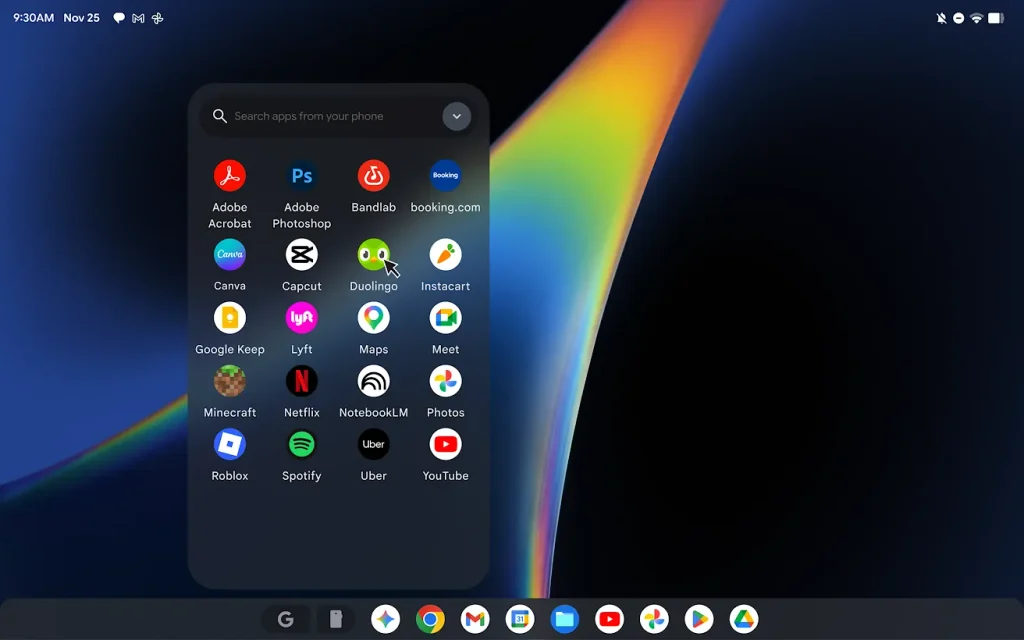
Cast My Apps is designed to let users open Android phone applications on their Googlebook without installing separate desktop versions. Quick Access, meanwhile, can provide access to files stored on the user’s phone from the laptop.
That could make Googlebook particularly interesting for people already invested in the Android ecosystem.
Instead of treating the phone and laptop as separate devices, Google is attempting to make them behave more like parts of one computing environment.
Google says the phone integration requires an Android 17-or-newer phone and setup.
Googlebook is not replacing Chromebooks
One point that could easily get lost in the launch coverage is that Chromebooks are not going away.
Google’s own Googlebook page describes Chromebooks and Googlebooks as separate categories. Chromebooks will continue to target users who want simplicity, speed and efficiency, while Googlebook is positioned as a premium category with more powerful hardware and deeper intelligence features.
That gives Google two distinct laptop strategies.
| Googlebook | Chromebook |
| Premium laptop category | Established laptop category |
| Designed around Gemini Intelligence | Focused on simplicity and efficiency |
| Android + ChromeOS technologies | ChromeOS |
| Premium hardware | Broad range of hardware |
| Deep Android phone integration | Existing ChromeOS ecosystem |
| Advanced AI features | More traditional ChromeOS experience |
The exact boundaries between the two products will become clearer once the first Googlebooks reach stores.
Acer, Asus, Dell, HP and Lenovo are on board
Google isn’t manufacturing every Googlebook itself.
Instead, the company is working with major PC manufacturers. The first wave includes Acer, Asus, Dell, HP and Lenovo.
This approach resembles Google’s Chromebook strategy, where multiple hardware companies build devices around Google’s platform.
It also means Googlebook won’t be a single laptop.
Different manufacturers are expected to offer different designs, screen sizes, processors and configurations while adhering to Google’s broader Googlebook platform requirements.
That could be an advantage for consumers because it creates more choice. It also means the eventual Googlebook buying decision will involve comparing individual laptops rather than simply deciding whether to buy “the Googlebook.”
The Glowbar is making a comeback
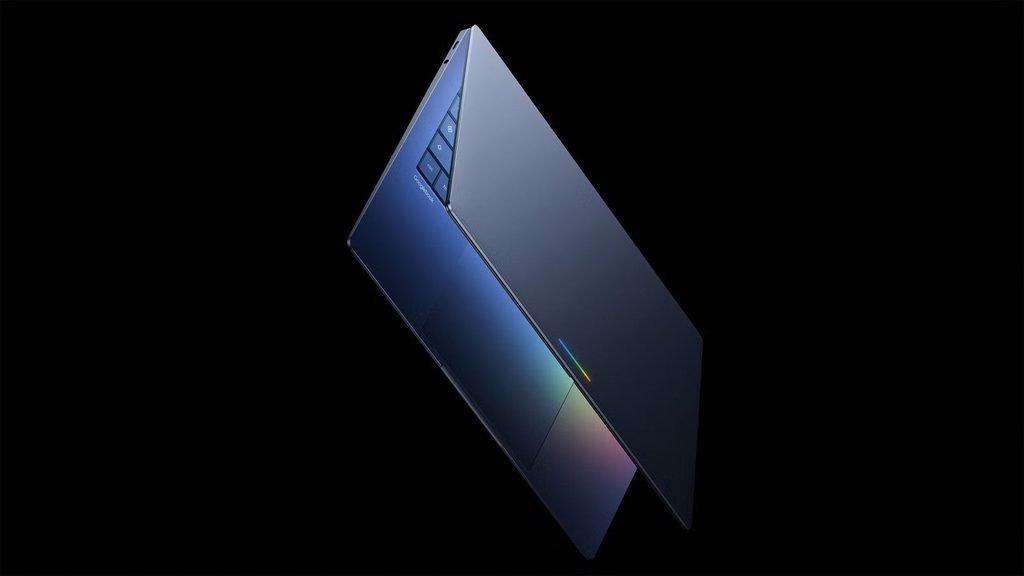
One of the most recognizable visual elements associated with Googlebook is the Glowbar.
The light bar appears in Google’s promotional material and leaked hardware imagery, giving the new laptops a distinctive visual identity. The concept recalls the colorful light bar used on the original Chromebook Pixel.
Google’s current website prominently features the Glowbar in Googlebook imagery, although the company has not fully detailed every function it will serve across the lineup.
Beyond aesthetics, the Glowbar could become one of the easiest ways to distinguish Googlebooks from conventional laptops.
What about Googlebook specifications?
This is where buyers should be careful.
Google has talked about premium hardware, but it has not yet published one universal Googlebook specification sheet because the devices will come from multiple manufacturers.
Some leaked models have provided a glimpse of what the first generation could look like.
For example, leaked information about Lenovo’s Googlebook 15 has pointed to a large OLED display, Intel Core Ultra hardware, up to 32GB of memory and other features associated with premium Windows laptops. However, these are manufacturer-specific leaked details rather than specifications Google has established for every Googlebook.
That distinction is important.
A Lenovo Googlebook and an Asus Googlebook may have substantially different hardware while sharing the same Googlebook software platform and core experiences.
What happened at the September 15 event?
Googlebook’s September 15 event in New York was a media preview rather than a conventional consumer launch event.
Earlier reporting had suggested that Google might publicly unveil the complete platform and hardware lineup at the event. Google subsequently clarified that there would be no public hardware announcements on September 15, making the event more of a media-focused preview.
That explains why the September 21 pre-order date is currently the more important date for consumers.
The media event gave journalists an opportunity to see the platform and hardware, while Google is using the following period to move toward actual orders.
Googlebook price: What will it cost?
Google has not announced official Googlebook pricing yet.
This is one of the biggest unanswered questions ahead of the September 21 pre-order window. Google’s official website currently promotes the pre-order date without publishing a universal starting price.
Because Googlebook is a multi-manufacturer platform, prices will also likely vary considerably depending on the processor, display, memory, storage and form factor.
Some reports have speculated about prices in the premium-laptop range, but those estimates should not be treated as confirmed Google pricing.
The first official retail listings will provide a much clearer picture.
Can Googlebook compete with Windows and MacBooks?
This is ultimately the bigger question.
Googlebook enters a market dominated by Windows laptops and Apple’s MacBook lineup. It isn’t enough for Google to make Android apps run on a larger screen.
The platform needs to offer a desktop experience that works for productivity, multitasking, file management, external displays and professional applications.
Google’s strategy is clearly different from Microsoft’s.
Windows starts with a traditional desktop operating system and is adding increasingly sophisticated AI features. Google is approaching the problem from the other direction, bringing Android’s enormous application ecosystem and Gemini intelligence into a more capable laptop environment.
Apple, meanwhile, benefits from tight integration between macOS, iPhone and its own silicon.
Googlebook’s success will therefore depend heavily on whether Google’s Android-plus-Gemini approach feels genuinely useful rather than simply different.
Googlebook launch: What happens next?
The immediate milestone is September 21, when pre-orders officially open.
By then, buyers will want answers to several practical questions:
- Which Googlebook models will actually be available?
- What are their starting prices?
- When will orders ship?
- Which processors and display options will each manufacturer offer?
- How well do Android apps behave on the desktop?
- How useful are Magic Pointer and Create My Widget in everyday work?
- How deep is the integration with Android phones?
Those answers will determine whether Googlebook is simply an interesting new platform or a serious alternative to traditional premium laptops.
For now, Google’s pitch is clear: Googlebook is a premium laptop category built around Gemini, Android integration and a new approach to desktop computing.
The September 21 pre-order date is the next major test. Until pricing, shipping information and final hardware configurations are public, the most sensible approach is to treat Googlebook as a promising platform with several important pieces still to be revealed.
Googlebook official website — Current pre-order date and official Googlebook features.



[…] has officially launched Googlebook, a new category of premium laptops designed to combine the strengths of Android and ChromeOS with […]