


The vivo Watch 6 has officially launched in China as vivo’s latest premium smartwatch, arriving alongside the company’s X500 smartphone series. Rather than competing purely on fitness features, the new wearable combines premium materials with a bright AMOLED display, dual-frequency GPS, eSIM connectivity and a large battery.
The Watch 6 is available with either a stainless steel or titanium case, while sapphire crystal protection comes standard across the range. It also runs vivo’s latest BlueOS 4.0 software and offers up to 21 days of battery life under light-use conditions.
Here’s everything you need to know about the vivo Watch 6, including its design, display, health tracking, battery, connectivity, price and availability.
vivo Watch 6 Design
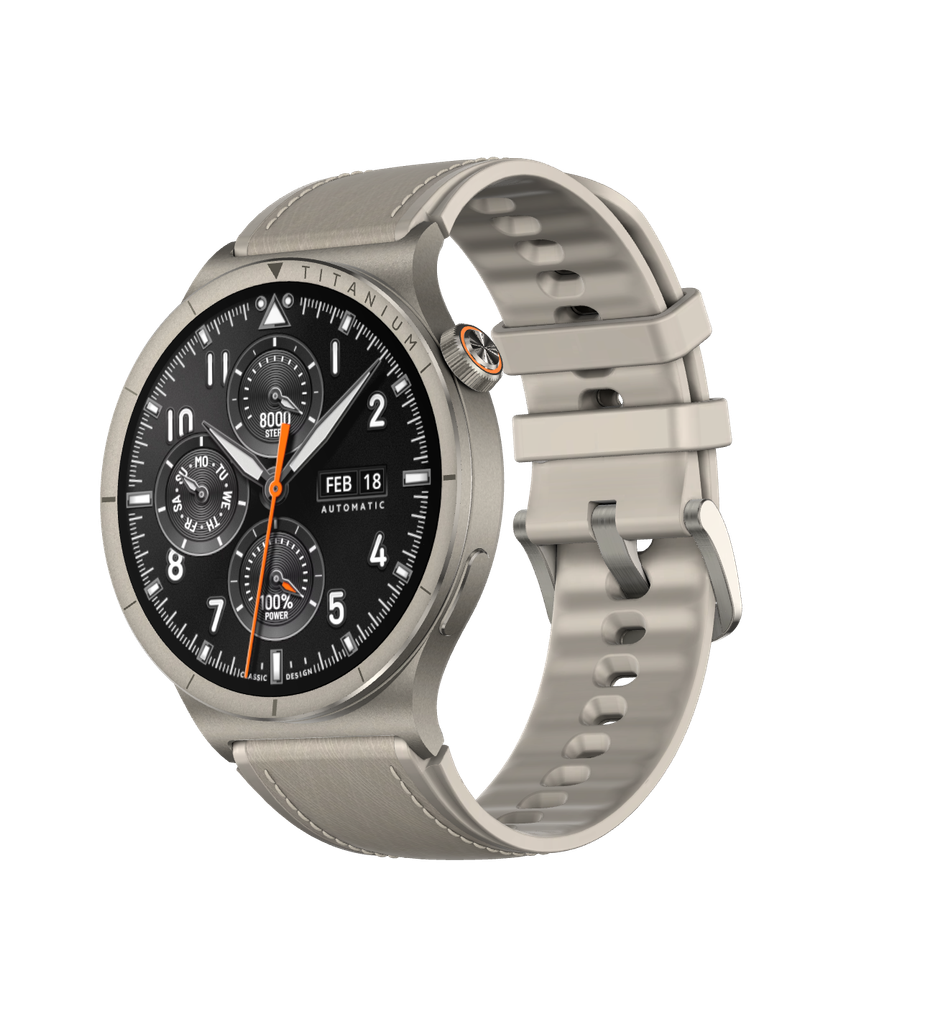
The vivo Watch 6 takes a more premium approach to smartwatch construction.
The watch measures 45mm across and comes in stainless steel and titanium versions. The flagship model uses TC4 aerospace-grade titanium alloy, giving it a lighter construction while retaining the premium appearance expected from a high-end smartwatch. The titanium version weighs about 37 grams, excluding the strap.
The stainless steel versions are available in Wilderness and Moonlight finishes, while the titanium model gets a Natural Color option.
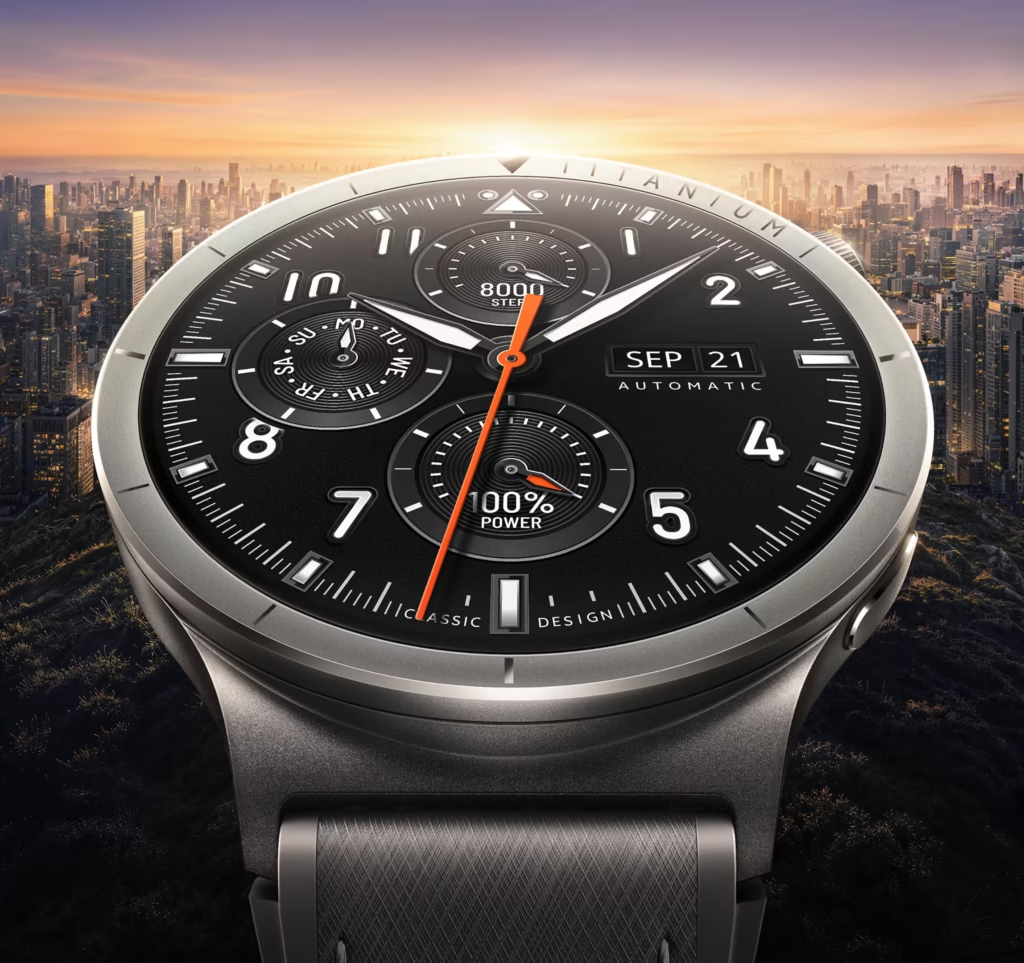
The use of sapphire crystal is particularly notable. Sapphire is substantially more scratch-resistant than conventional smartwatch glass, making it useful for a device designed to be worn throughout the day and during outdoor activities.
1.47-Inch AMOLED Display
The vivo Watch 6 features a 1.47-inch AMOLED display with a resolution of 466 x 466 pixels and a 60Hz refresh rate.
The headline specification is brightness. vivo rates the panel at up to 3,500 nits of local peak brightness, which should make the display easier to see during outdoor workouts and in bright sunlight.
The bezels are also relatively slim at around 1.49mm.
For situations where extreme brightness is unnecessary, the display can reduce brightness considerably. The always-on display uses a dynamic refresh rate to help limit battery consumption.
505mAh Battery and Up to 21 Days of Endurance
Battery life is one of the biggest selling points of the vivo Watch 6.
The smartwatch has a 505mAh battery, with vivo rating it for up to 21 days under light-use conditions. That figure naturally drops when more demanding features are enabled.
The reported endurance figures include:
| Usage scenario | Battery life |
| Light use | Up to 21 days |
| Typical Bluetooth use | Around 10 days |
| Always-On Display | Around 6 days |
| eSIM standalone use | Around 4 days |
These figures illustrate an important point: smartwatch battery estimates depend heavily on settings and connectivity. GPS, cellular connectivity, frequent workouts and an always-on display can all increase power consumption.
Still, even the typical-use figure puts the Watch 6 in a different endurance category from many mainstream smartwatches.
Health and Fitness Tracking

The vivo Watch 6 is equipped with an extensive collection of sensors for health and activity tracking.
It includes optical sensors for heart-rate and blood-oxygen monitoring, along with an accelerometer, gyroscope, geomagnetic sensor, barometer and ambient-light sensor.
vivo says the watch supports more than 100 sports modes, covering activities ranging from running and cycling to other outdoor and indoor workouts.
The company is also highlighting more advanced running and cycling features. The watch can provide running guidance and uses its sensors and positioning capabilities to track outdoor activities.
vivo claims an average heart-rate accuracy of 97.2% compared with professional heart-rate chest straps across different exercise scenarios. This is a manufacturer claim rather than an independent test result, so real-world accuracy can vary depending on the activity and wearer.
The Watch 6 also supports sleep, stress and other health-related tracking functions.
Dual-Frequency GPS and Offline Maps
Outdoor navigation is another area where vivo has upgraded the Watch 6.
The smartwatch supports dual-frequency GNSS, which can improve positioning reliability in challenging environments compared with simpler single-frequency systems.
It also includes a barometer and supports offline maps and route navigation, making it more useful for hiking, running and cycling without requiring constant phone interaction.
For outdoor users, these features could be more meaningful than simply adding more workout modes.
eSIM Connectivity
The vivo Watch 6 comes in both Bluetooth and eSIM-enabled versions.
The eSIM model can handle cellular functions such as calls and messages without depending entirely on a paired smartphone. It can also support navigation and connected features when the phone isn’t nearby.
The trade-off is battery life. Vivo’s estimates drop considerably when the watch operates independently over cellular connectivity.
The titanium model is offered with eSIM connectivity, while buyers can choose between Bluetooth and eSIM configurations with the stainless steel version.
BlueOS 4.0
The vivo Watch 6 runs BlueOS 4.0, vivo’s proprietary smartwatch operating system.
BlueOS gives vivo greater control over the wearable experience and allows the company to integrate the Watch 6 closely with its smartphone ecosystem.
The watch also includes vivo’s BlueLM AI assistant, which can support contextual functions such as reminders.
However, BlueOS also means the Watch 6 is positioned differently from Wear OS watches. Buyers who depend heavily on Google’s smartwatch ecosystem should therefore check app and service compatibility before considering the device.
vivo Watch 6 Price
The vivo Watch 6 has launched in China in three main configurations.
| Variant | Price in China |
| Stainless steel, Bluetooth | CNY 999 |
| Stainless steel, eSIM | CNY 1,399 |
| Titanium, eSIM | CNY 1,999 |
The entry-level model therefore starts at around $149 based on direct currency conversion, although international pricing cannot be inferred directly from that figure.
The titanium version commands a substantial premium because it combines the higher-end case material with cellular connectivity.
vivo Watch 6 Availability
The vivo Watch 6 has launched in China alongside the vivo X500 series.
As of September 22, 2026, vivo has not confirmed a broader international rollout for the Watch 6. That means buyers in markets such as India and other regions will need to wait for an official availability announcement rather than assuming the Chinese pricing will carry over.
This is particularly relevant because smartwatch software, cellular compatibility and supported services can differ between markets.
vivo Watch 6: Key Specifications
| Specification | vivo Watch 6 |
| Case size | 45mm |
| Case materials | Stainless steel / TC4 titanium |
| Display | 1.47-inch AMOLED |
| Resolution | 466 x 466 pixels |
| Refresh rate | 60Hz |
| Peak brightness | Up to 3,500 nits |
| Glass | Sapphire crystal |
| Battery | 505mAh |
| OS | BlueOS 4.0 |
| GPS | Dual-frequency GNSS |
| Connectivity | Bluetooth 5.4, NFC, optional eSIM |
| Health sensors | Heart rate, SpO2 and motion sensors |
| Sports modes | 100+ |
| Speaker/microphone | Yes |
| Water resistance | IP68 |
| Offline maps | Yes |
Is vivo Watch 6 Worth Watching?
The vivo Watch 6 is an interesting smartwatch because its priorities are different from many mainstream competitors.
The titanium construction and sapphire crystal give it a premium hardware foundation, while the 3,500-nit AMOLED display addresses outdoor visibility. The 505mAh battery and 21-day light-use rating also make endurance a major part of the package.
Its dual-frequency GPS, offline maps and extensive fitness tracking make it particularly relevant to runners, cyclists and outdoor users.
The biggest limitation is ecosystem availability. BlueOS 4.0 is closely tied to vivo’s ecosystem, while international availability has not yet been confirmed.
For now, the Watch 6 looks like a substantial upgrade in vivo’s wearable lineup, especially for users who prioritize battery life, durable materials and outdoor tracking over a huge third-party app ecosystem.
Images Source: Vivo Website