

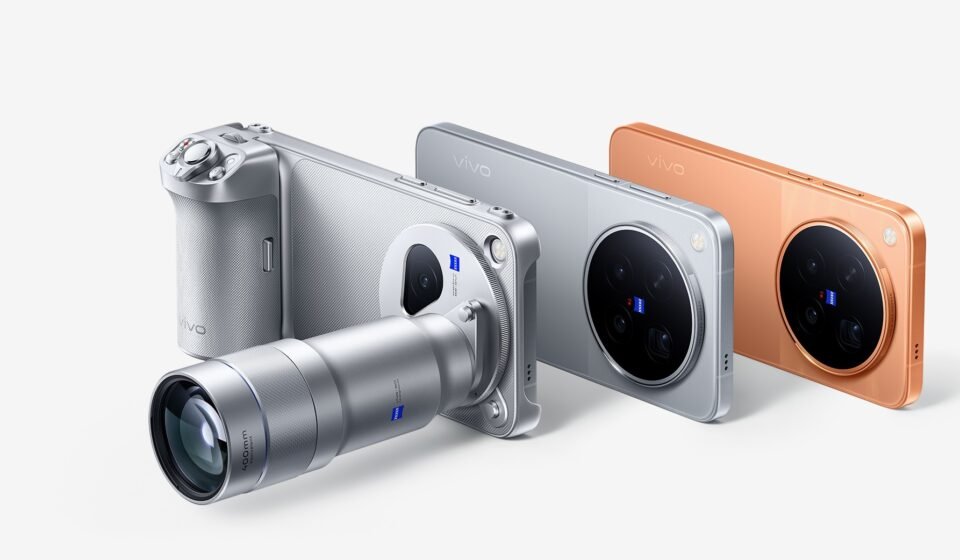

vivo has officially launched its new X500 flagship series in China, introducing the vivo X500, X500 Pro and X500 Pro Max. The new lineup succeeds the X300 family and puts a strong emphasis on cameras, video recording, high-end displays and large batteries.
The X500 Pro and X500 Pro Max are particularly notable because they are among the first smartphones to use MediaTek’s new Dimensity 9600 Pro, a 2nm flagship chipset. The top-end X500 Pro Max also introduces a 200MP periscope camera and a new Sony Lytia L910 main sensor designed to deliver a claimed 17 stops of dynamic range.
The phones have launched in China, with sales scheduled to begin later in September. International availability has not yet been fully announced.
vivo X500 Series: Three Models, Different Priorities
The new lineup consists of three models:
- vivo X500
- vivo X500 Pro
- vivo X500 Pro Max
The standard X500 focuses on delivering flagship-class hardware at a lower price, while the Pro models move further into premium camera and performance territory.
The X500 Pro Max is the biggest and most ambitious model, with a 6.85-inch display, 200MP telephoto camera, up to 16GB of RAM and an 8,000mAh battery.
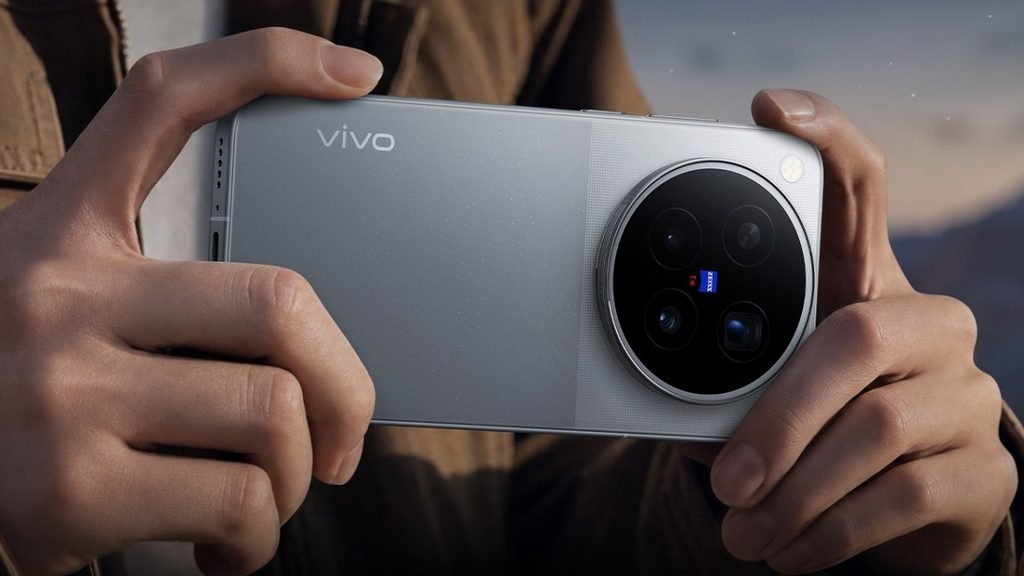
vivo X500 Specifications
The standard vivo X500 comes with a 6.59-inch 1.5K AMOLED display and a 144Hz refresh rate. It is powered by the MediaTek Dimensity 9600M chipset and runs OriginOS 7 based on Android 17.
The phone packs a 7,500mAh battery with support for 90W wired charging and 40W wireless charging.
Its rear camera system consists of three sensors, including a 50MP primary camera, a 50MP secondary camera and a 64MP camera. The front-facing camera is also rated at 50MP.
The standard model therefore isn’t simply a stripped-down flagship. It retains a large battery, high-refresh-rate display and a versatile camera system while using a different chipset from the Pro models.
vivo X500 Pro and X500 Pro Max Get Dimensity 9600 Pro
The biggest hardware change between the standard X500 and the Pro models is the processor.
The vivo X500 Pro and X500 Pro Max use MediaTek’s Dimensity 9600 Pro, built on a 2nm manufacturing process. The chipset reaches up to 4.55GHz and is paired with a new-generation GPU and AI processing hardware.
This makes the X500 Pro series particularly interesting for demanding applications, gaming, photography processing and video recording.
The Pro models also support up to 4K recording at 240 frames per second, giving them considerably more flexibility for slow-motion video and high-frame-rate recording.
vivo X500 Pro Max Camera System
The camera system is where the X500 Pro Max gets particularly ambitious.
The phone features a 50MP Sony Lytia L910 main camera with a 1/1.28-inch sensor. vivo has worked with Sony on the sensor, which incorporates LOFIC technology.
According to vivo’s claims reported by The Verge, the sensor can achieve up to 17 stops of dynamic range. The goal is to retain more detail between extremely bright and dark areas of a scene.
The main camera also receives 3-degree optical image stabilization, which vivo positions as a gimbal-grade stabilization system. The X500 Pro uses 1.5-degree stabilization on its main camera.
The Pro Max also features a 200MP periscope telephoto camera with 3.7x optical zoom. The camera can be paired with a 400mm teleconverter accessory for longer-range photography.
That combination makes the Pro Max particularly focused on photography rather than simply increasing the number of cameras.
4K 240fps Video Recording
Video is another major focus of the X500 Pro series.
The Dimensity 9600 Pro enables 4K video recording at up to 240fps, while vivo also supports 10-bit Log recording and cinematic video features.
For enthusiasts, 10-bit Log can provide greater flexibility during post-production because it preserves more information for color grading.
The phones also support Dolby Vision-related video features, further positioning the Pro models as creator-oriented smartphones.
Displays on the X500 Series
The three models use different display sizes.
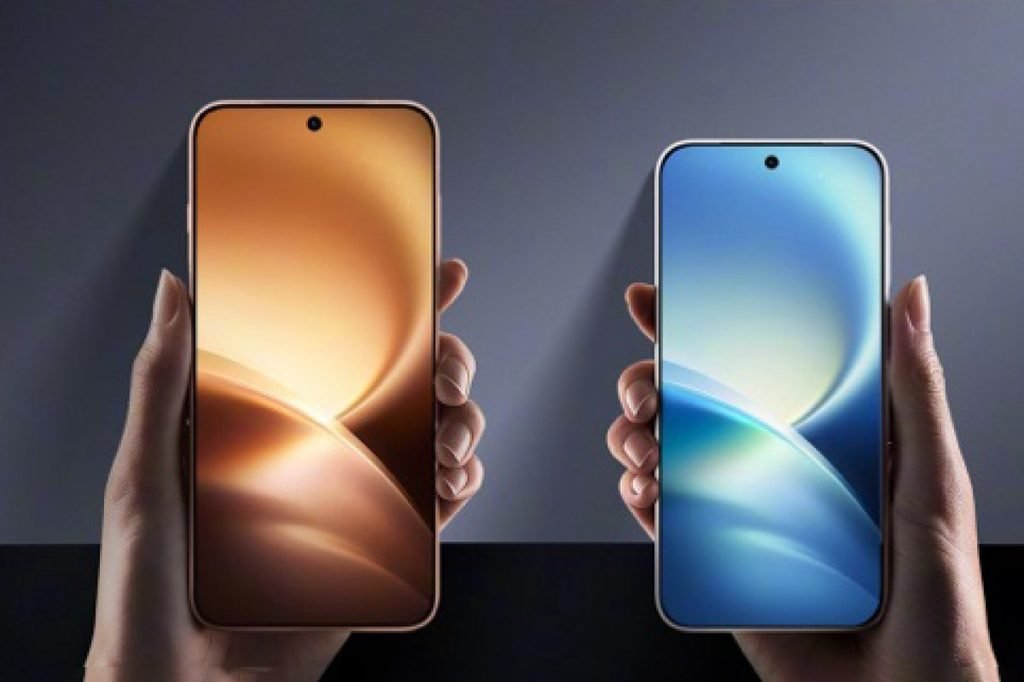
The standard X500 has a 6.59-inch 1.5K AMOLED display with a 144Hz refresh rate.
The X500 Pro is smaller at approximately 6.36 inches and uses a 144Hz adaptive LTPO panel. It also includes features such as Dolby Vision, HDR10+ and a low-brightness mode capable of reaching approximately 1 nit.
The X500 Pro Max moves to a much larger 6.85-inch 2K OLED display, making it the model aimed at users who want the largest and highest-resolution panel in the lineup.
Large Batteries Across the Range
Battery capacity is another major theme.
The standard X500 gets a 7,500mAh battery, while the X500 Pro and Pro Max offer large-capacity batteries of their own. The Pro Max reaches 8,000mAh, according to vivo’s official specifications.
The large batteries are significant because flagship phones traditionally balance thin designs against relatively smaller capacities. vivo is taking the opposite approach with the X500 family.
The X500 supports 90W wired and 40W wireless charging, while charging specifications differ between models.
OriginOS 7 and Android 17
All three phones run OriginOS 7, vivo’s latest software platform based on Android 17.
The Chinese versions also integrate vivo’s AI features and services, including its Blue Heart assistant.
However, buyers outside China should wait for official international announcements before assuming the Chinese software experience will be identical to global models. vivo has not yet provided a complete international launch plan for the series.
vivo X500 Series Price in China
The Chinese launch prices start at:
| Model | Starting price |
| vivo X500 | CNY 5,499 |
| vivo X500 Pro | CNY 6,499 |
| vivo X500 Pro Max | CNY 6,999 |
The X500 Pro Max is available in configurations reaching 16GB RAM and 1TB storage, with the top configuration priced at CNY 12,999.
The X500 and X500 Pro Max are scheduled to go on sale in China on September 24, while the X500 Pro follows on September 29.
Chinese pricing should not be treated as a direct indication of eventual Indian or international pricing.
vivo X500 vs X500 Pro vs X500 Pro Max
| Feature | vivo X500 | X500 Pro | X500 Pro Max |
| Display | 6.59-inch, 1.5K, 144Hz | 6.36-inch, 144Hz LTPO | 6.85-inch, 2K |
| Chipset | Dimensity 9600M | Dimensity 9600 Pro | Dimensity 9600 Pro |
| Main camera | 50MP | 50MP Sony Lytia L910 | 50MP Sony Lytia L910 |
| Telephoto | 64MP | 50MP class | 200MP periscope |
| Battery | 7,500mAh | Large-capacity | 8,000mAh |
| RAM | Up to 12GB listed | Up to 12GB listed | Up to 16GB |
| Software | OriginOS 7 / Android 17 | OriginOS 7 / Android 17 | OriginOS 7 / Android 17 |
Specifications can vary by configuration and market.
What Makes the vivo X500 Series Different?
The X500 family is clearly built around imaging.
Rather than simply adding higher megapixel numbers, vivo has focused on the underlying camera hardware. The new Sony Lytia L910 sensor, advanced optical stabilization and 200MP periscope camera on the Pro Max all target different parts of mobile photography.
The Pro models also push video capabilities with 4K 240fps recording and 10-bit Log support.
At the same time, the large batteries and high-refresh-rate displays make the phones more practical for everyday use.
vivo X500 Series Availability
The X500 series has launched in China, but vivo has not yet announced complete international pricing and availability. Previous reports had suggested an India launch could follow, but those reports should not be treated as an official confirmation until vivo provides details.
For now, the Chinese models and specifications are the confirmed reference point.
Final Takeaway
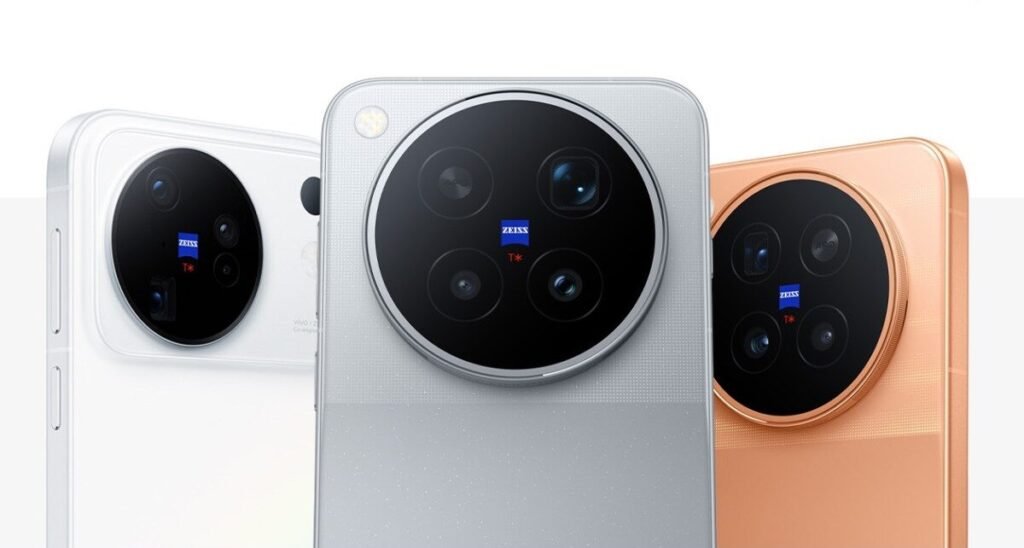
The vivo X500 series is one of vivo’s most ambitious flagship lineups yet.
The standard X500 combines a 144Hz display, Dimensity 9600M chipset and 7,500mAh battery, while the X500 Pro and X500 Pro Max move into more specialized flagship territory with the 2nm Dimensity 9600 Pro platform.
The X500 Pro Max is the headline device, thanks to its 200MP periscope camera, Sony Lytia L910 main sensor, 3-degree optical stabilization, 2K display and 8,000mAh battery.
With China sales beginning later this month, the next major question is how vivo will position the X500 family internationally, particularly in markets such as India.
Source: Vivo