



Apple has announced new MacBook Pro models featuring OLED displays and touchscreen support, marking a major change for its professional laptop lineup. The new 14-inch and 16-inch models introduce Apple’s PROLED XDR display technology, a redesigned Dynamic Island, a thinner and lighter body, and enhanced audio capabilities.
The latest MacBook Pro models are powered by Apple’s M5 Pro and M5 Max processors and run macOS 27 with Apple Intelligence features. They also offer up to 128GB of unified memory, up to 16TB of storage and battery life rated at up to 24 hours.
The biggest change, however, is the arrival of touch input on the Mac for the first time. Apple says the feature will complement the keyboard and trackpad rather than replace them, giving professionals another way to interact with creative applications and everyday tasks.
Apple MacBook Pro OLED Models: Price and Availability
Apple has introduced the new MacBook Pro models in 14-inch and 16-inch sizes, with pricing varying according to the processor configuration.
Apple MacBook Pro OLED price in India
| Model | Price in India | Education price |
|---|---|---|
| 14-inch MacBook Pro, M5 Pro | ₹3,49,900 | ₹3,31,900 |
| 16-inch MacBook Pro, M5 Pro | ₹4,09,900 | ₹3,85,900 |
| 14-inch MacBook Pro, M5 Max | ₹5,49,900 | ₹5,12,900 |
| 16-inch MacBook Pro, M5 Max | ₹5,89,900 | ₹5,52,900 |
Pre-orders opened on October 28, 2026, while retail availability is scheduled to begin on November 6.
Apple has not confirmed the corresponding Indian prices in the announcement covered here. Local pricing may differ because of taxes, currency conversion and regional configurations.
The new OLED models will be sold alongside the existing MacBook Pro range, giving buyers the option to choose between conventional LCD displays and the new touchscreen OLED variants.
PROLED XDR Display Brings OLED to MacBook Pro
The new PROLED XDR display is the main highlight of Apple’s latest MacBook Pro lineup. It uses tandem OLED technology, which layers two OLED panels to improve brightness and overall display performance.

Apple claims peak brightness of up to 2,000 nits, along with sustained brightness of up to 1,000 nits. The display also offers a reported contrast ratio of 10,000,000:1, allowing dark scenes, bright highlights and fine image details to appear with greater separation.
The panels support an adaptive refresh rate of up to 120Hz, with the refresh rate varying according to the content being displayed. This should help deliver smoother scrolling, animations and timeline navigation in supported applications.
Colour accuracy is another important focus. The display supports both the P3 and Adobe RGB colour gamuts, making it relevant for photographers, video editors, designers and other professionals working with colour-sensitive content.
Apple has also introduced an optional nano-texture finish designed to reduce reflections and glare while maintaining image clarity.
For creative professionals, the combination of OLED contrast, high brightness and broad colour coverage could make the new display particularly useful for editing photographs, grading video and working with detailed visual assets.
Touchscreen Support Arrives on Mac for the First Time
The new MacBook Pro introduces touchscreen functionality to Apple’s Mac lineup. Users can interact directly with on-screen content using gestures such as swiping, pinching to zoom, dragging elements and selecting interface controls.
Apple sees touch as an additional input method rather than a replacement for the keyboard and trackpad. This approach is intended to preserve the traditional Mac workflow while making certain interactions more direct.
For example, designers could manipulate elements in creative applications, zoom into images or move objects around a canvas using their fingers. Video editors and presentation creators may also benefit from direct interaction with timelines, controls and visual assets.
The display’s integrated touch sensor is designed to reduce the distance between the user’s finger and the displayed content, helping make interactions feel responsive.
However, Apple has not announced Apple Pencil support for these MacBook Pro models. The software experience also remains centred on macOS rather than a completely redesigned touch-first interface.
This means the usefulness of the touchscreen will depend on how well individual applications adapt their controls and workflows for touch interaction.
Dynamic Island Replaces the Display Notch
Apple has replaced the traditional display notch with the Dynamic Island on the new MacBook Pro models.
The feature provides a dedicated area for information such as Spotlight, Live Activities and Siri-related functions. It brings an interface concept previously associated with Apple’s iPhone lineup to the Mac.
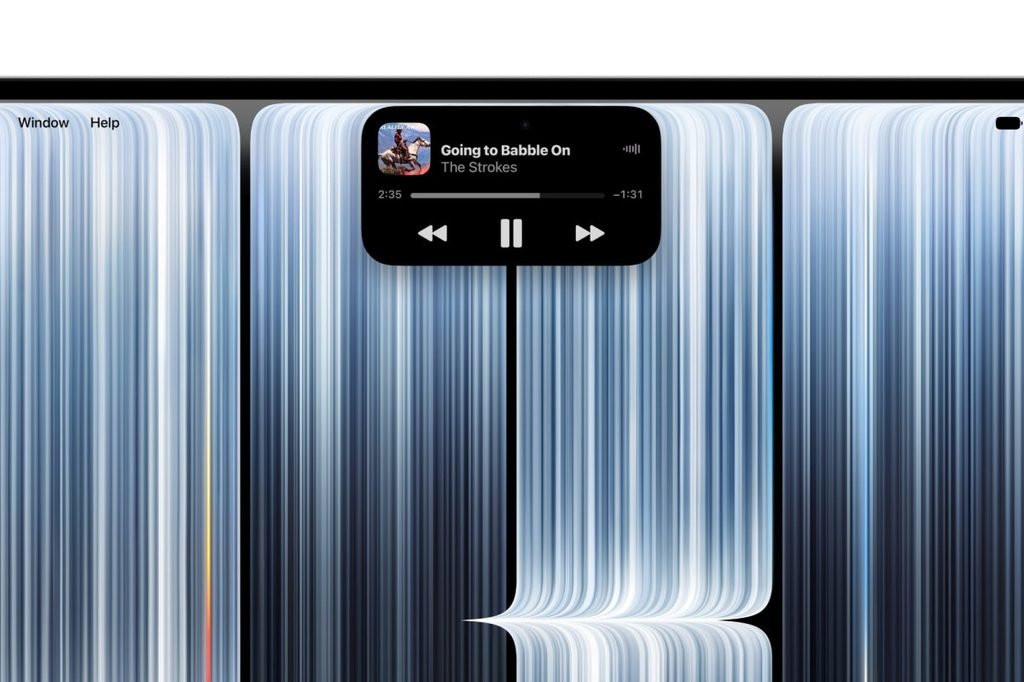
Dynamic Island is designed to surface useful information without requiring users to leave their current application. Depending on the supported feature, users can check updates and interact with certain activities while continuing to work.
However, the new MacBook Pro does not include Face ID. Apple continues to rely on Touch ID for secure authentication, so users should not expect iPhone-style facial recognition on these laptops.
The updated display design provides a different visual identity for the OLED variants while retaining the familiar macOS environment.
M5 Pro and M5 Max Power the New MacBook Pro
The new models use Apple’s M5 Pro and M5 Max chips, designed for demanding professional workloads such as software development, video production, 3D work and AI-assisted tasks.
Depending on the configuration, the laptops support up to 128GB of unified memory and up to 16TB of storage.
Apple has retained the core processor options and broader connectivity features associated with its existing MacBook Pro range, meaning the new models focus primarily on display technology, touch interaction and physical design changes.
The combination of Apple silicon, unified memory and macOS 27 is intended to support demanding creative workflows while keeping performance consistent across applications.
Apple Intelligence features and Siri AI are also part of the software experience, although the availability of individual capabilities may vary by language, region and software version.
Thinner Design, Lighter Body and Improved Speakers

Apple has redesigned the physical structure of the new MacBook Pro models, making them thinner and lighter than their predecessors.
The 14-inch model weighs approximately 3 pounds, while the 16-inch version weighs around 4 pounds. These reductions make the laptops easier to carry between offices, studios and other work locations.
The internal thermal architecture has also been revised to maintain sustained performance while directing warm air away from the display.
Another upgrade comes in the audio department. The laptops retain a six-speaker sound system but feature redesigned woofers and new tweeters. Apple says the updated system delivers 50% deeper bass, along with improved sound clarity.
The speaker design has also been adjusted to maintain audio quality when the laptop lid is closed.
Other hardware features include Thunderbolt 5 connectivity, a 12MP Center Stage camera and studio-quality microphones. These additions make the new models suitable for video conferencing, content creation and professional collaboration.
Battery Life and Software
Apple rates the new MacBook Pro models for up to 24 hours of battery life, depending on the configuration and usage conditions.
The company has focused on combining improved portability with the sustained performance expected from its professional laptops. Actual battery life will vary according to workload, display brightness, connected accessories and network activity.
The laptops run macOS 27, bringing Apple’s latest operating system features and AI-related capabilities to the updated hardware.
With a high-resolution OLED display, touch input and powerful processors, the new MacBook Pro is designed to serve users who need a portable workstation for demanding creative and technical work.
Should You Consider the New MacBook Pro?
The new MacBook Pro models represent a significant evolution of Apple’s professional laptop range. The tandem OLED display, touchscreen support and Dynamic Island provide the most visible changes, while the lighter construction and improved speakers enhance everyday usability.
For designers, photographers, video editors and developers, the combination of a high-quality display, powerful Apple silicon and expanded input options could make the laptops appealing upgrades.
However, the starting price is high, and users who are satisfied with the existing LCD MacBook Pro may not need to upgrade immediately. The real value of the touchscreen will also depend on application support and how naturally it fits into professional workflows.
Overall, Apple’s latest MacBook Pro models bring OLED and touch interaction to the Mac while retaining the performance-focused foundation of the existing lineup. They will be worth considering for professionals who prioritise display quality, portability and advanced computing capabilities.


