
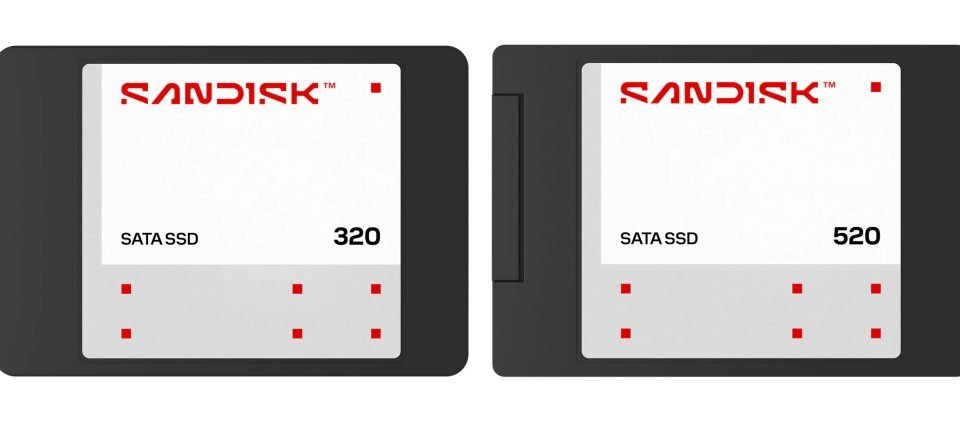

SanDisk has launched two new 2.5-inch SATA solid-state drives (SSDs) in India: the SanDisk 520 SATA SSD and the SanDisk 320 SATA SSD. The new storage solutions target users looking to upgrade older desktops and laptops, replace traditional hard drives or add faster storage without moving to a newer interface.
The SanDisk 520 is designed for demanding workloads, including content creation and professional productivity, while the SanDisk 320 focuses on everyday computing. Both drives use the SATA interface and offer a straightforward way to improve the responsiveness of compatible systems.
SanDisk 520 SATA SSD: Features and Specifications
The SanDisk 520 SATA SSD is aimed at IT professionals, content creators and prosumers who need reliable storage for applications, large files and regular data transfers.
The drive offers sequential read speeds of up to 560MB/s and write speeds of up to 525MB/s on the 4TB model. It uses 3D NAND technology and is available in capacities of up to 4TB, providing space for creative projects, media libraries, software and other large files.
SanDisk rates the 4TB variant for up to 1,000 terabytes written (TBW), while its mean time to failure (MTTF) rating reaches 2.25 million hours. These are manufacturer reliability metrics, not guarantees of how long an individual drive will last.
The SSD also supports Acronis True Image for SanDisk for data migration and the SanDisk Dashboard utility for checking drive health, monitoring storage and managing firmware updates.
It comes with a five-year limited warranty, making it the more premium option in the new lineup.
SanDisk 320 SATA SSD: Features and Specifications
The SanDisk 320 SATA SSD is designed for mainstream users who want to upgrade from a traditional mechanical hard disk drive (HDD).
It offers sequential read speeds of up to 545MB/s and comes in capacities ranging from 250GB to 2TB. The drive is suitable for operating systems, everyday applications, documents and multimedia files.
Moving from an HDD to an SSD can significantly improve boot times, application loading and general system responsiveness. Since SSDs have no moving mechanical parts, they are also more resistant to physical shocks than conventional hard drives.
The SanDisk 320 includes access to Acronis True Image for SanDisk for drive cloning and SanDisk Dashboard for monitoring storage and drive health. It carries a three-year limited warranty.
SanDisk 520 vs SanDisk 320: Key Differences
| Feature | SanDisk 520 | SanDisk 320 |
| Form factor | 2.5-inch SATA | 2.5-inch SATA |
| Maximum read speed | Up to 560MB/s | Up to 545MB/s |
| Maximum write speed | Up to 525MB/s on 4TB model | Not specified in the launch details |
| Capacity | Up to 4TB | 250GB to 2TB |
| Endurance rating | Up to 1,000TBW on 4TB model | Not specified |
| Warranty | 5 years limited | 3 years limited |
| Target users | Professionals and creators | Everyday users and HDD upgrades |
Both models are designed for SATA-based systems, so they will not deliver the much higher transfer rates associated with modern NVMe PCIe SSDs. Their actual performance will also depend on the computer, interface and workload.
SanDisk 520 and SanDisk 320 Price in India
The new SSDs are available in India at the following starting prices:
- SanDisk 520 SATA SSD: Starts at Rs. 8,600.
- SanDisk 320 SATA SSD: Starts at Rs. 5,700.
The SanDisk 520 is listed through participating e-commerce platforms and retail stores, while the SanDisk 320 is available through retail outlets across India. Prices may vary depending on the storage capacity and retailer.
Should You Upgrade to These SanDisk SSDs?
The SanDisk 520 is worth considering for users who need higher capacities, a longer warranty and a stated endurance rating for frequent data writes. Its 4TB option may appeal to professionals managing large collections of files and projects.
The SanDisk 320 is aimed at more affordable upgrades, particularly for older computers that still rely on mechanical hard drives. It offers a practical way to improve everyday responsiveness without replacing an entire system.
Both drives are intended for users who want to extend the useful life of existing hardware. Before buying, users should check whether their desktop or laptop supports a 2.5-inch SATA drive and whether the chosen capacity fits their needs.
With these launches, SanDisk is expanding its SATA SSD options for users who need conventional storage upgrades rather than a full transition to NVMe-based hardware.